National park Plitvice Lakes
Plitvice Lakes National Park is one of the oldest and largest national parks in Croatia. In 1979, the Plitvice Lakes National Park was included in the UNESCO World Heritage List for its extraordinary and picturesque series of travertine lakes, caves and waterfalls. The national park was founded in 1949 and is located in the mountainous karst area of central Croatia, on the border with Bosnia and Herzegovina. An important north-south road that passes through the area of the national park connects the interior of Croatia with the Adriatic coastal area. The protected area covers 296.85 square kilometers, and about 90% of this area belongs to Lika-Senj County, while the remaining 10% belongs to Karlovac County.
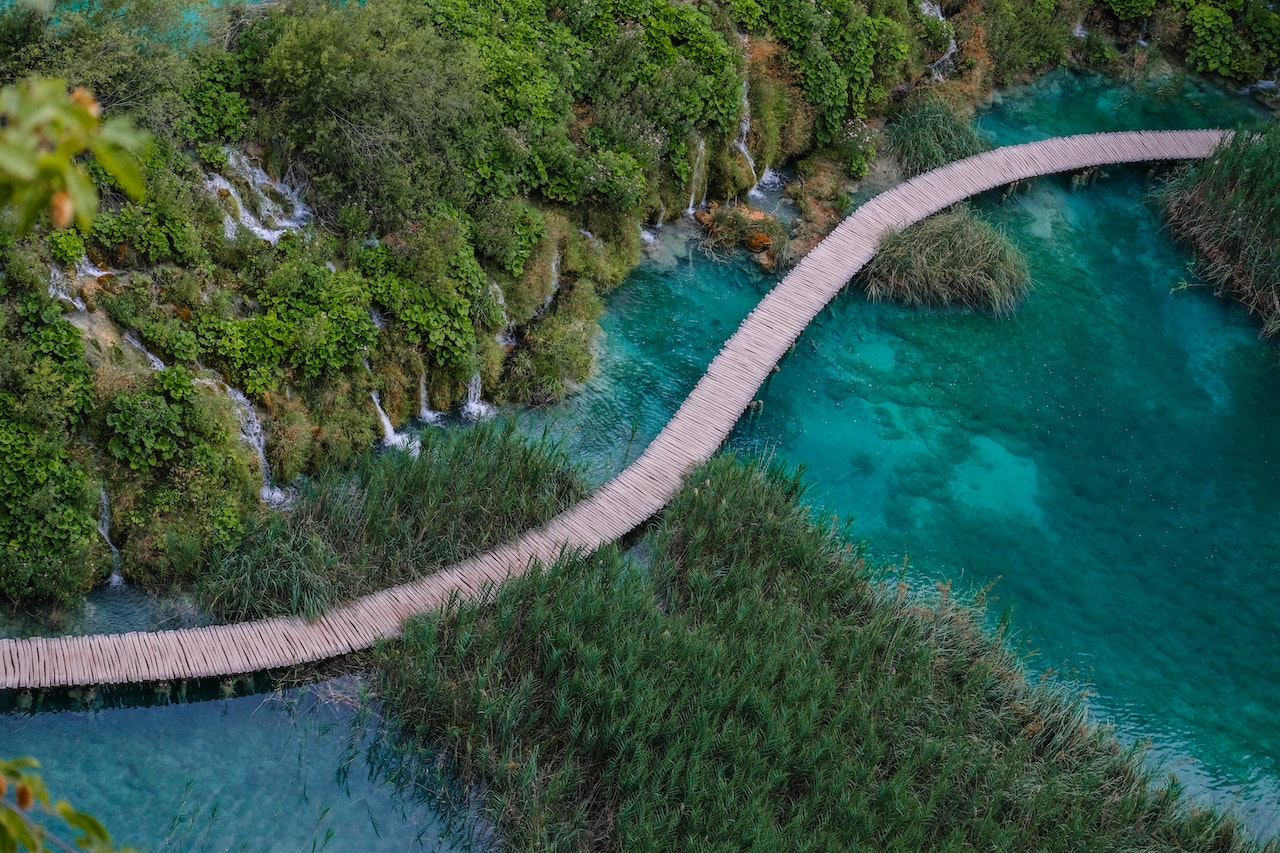
The Plitvice Lakes represent a continuous chain of 16 lakes and many waterfalls in western Croatia. The connected lakes, a total of 8 kilometers long, begin with two mountain streams that merge into the Matica river near Plitvički Ljeskovac. The river then flows into Lake Prošće, the highest in altitude, and then flows through a series of waterfalls and smaller lakes into Lake Kozjak, which is also the largest. Of the many waterfalls, Plitvice and Sastavci are the most spectacular, especially during the spring snow melt. The lakes are the focal point of the Plitvice Lakes National Park, which is also a nature reserve. The lakes are known for their distinctive colors, from azure to green, gray or blue. The colors are constantly changing depending on the amount of minerals or organisms in the water and the angle of the sunlight.
The special geographical location of the Plitvice Lakes and specific climatic features have contributed to the emergence of numerous natural phenomena and rich biological diversity in this area. Despite the proximity of the Mediterranean climatic zone, a moderate mountain climate prevails on the Plitvice Lakes. Such climatic conditions prevail thanks to the Velebit mountain range, which acts as a climatic divider between the coast and the Lika plateau.
The underground configuration of the Plitvice Lakes consists of different geological features, but in general the entire area can be attributed to the karst region of Southeast Europe. The characteristic of this karst area is brittle or porous rock, mainly limestone or dolomite. This configuration creates various geomorphological phenomena called valleys. Phenomena similar to those on the Plitvice Lakes exist in Rastoki (Slunj), in the Krka National Park, on the Una and Pliva rivers in Bosnia and Herzegovina, and on the Krushuna waterfalls in Bulgaria.
In terms of plant and animal diversity, the area of the Plitvice Lakes is one of the most important areas in Croatia, due to the climatic conditions and relatively remote location, as the lakes are quite far from polluted and noisy cities and industrial plants. As a result of such a low level of industrial development in this region and the early introduction of protective measures, an almost untouched landscape has been preserved.
The area of the national park is home to extremely diverse animal and bird species. Rare fauna such as the European brown bear, gray wolf, eagle, owl, Eurasian lynx, European wild cat, grouse, and many other common species can be found here. Plitvice Lakes National Park is densely wooded, mainly with beech, spruce and fir trees, and is characterized by a mixture of alpine and Mediterranean vegetation. It has an extremely large variety of plant communities, due to the range of microclimates, different soils and different altitudes.
Every year, Plitvička jezera National Park receives more than one million visitors, and the price of tickets can vary from HRK 30 to HRK 300 per person per day (depending on the season of arrival). It is important to emphasize that there are various ticket packages for minors, students or group visits.
Planning the trip from Biograd
Choose the entrance, route and transport before departure. Check travel time, weather, opening hours, ticket conditions and current park notices on the official website. For boat excursions, compare the route, included services and weather policy.
Practical advice
Bring drinking water, sun protection and footwear suited to the terrain. Mountain parks require proper hiking equipment; island and coastal parks require extra protection from sun and wind. Follow marked routes and park instructions.
Official information
np-plitvicka-jezera.hr · Phone: +385 53 751 015