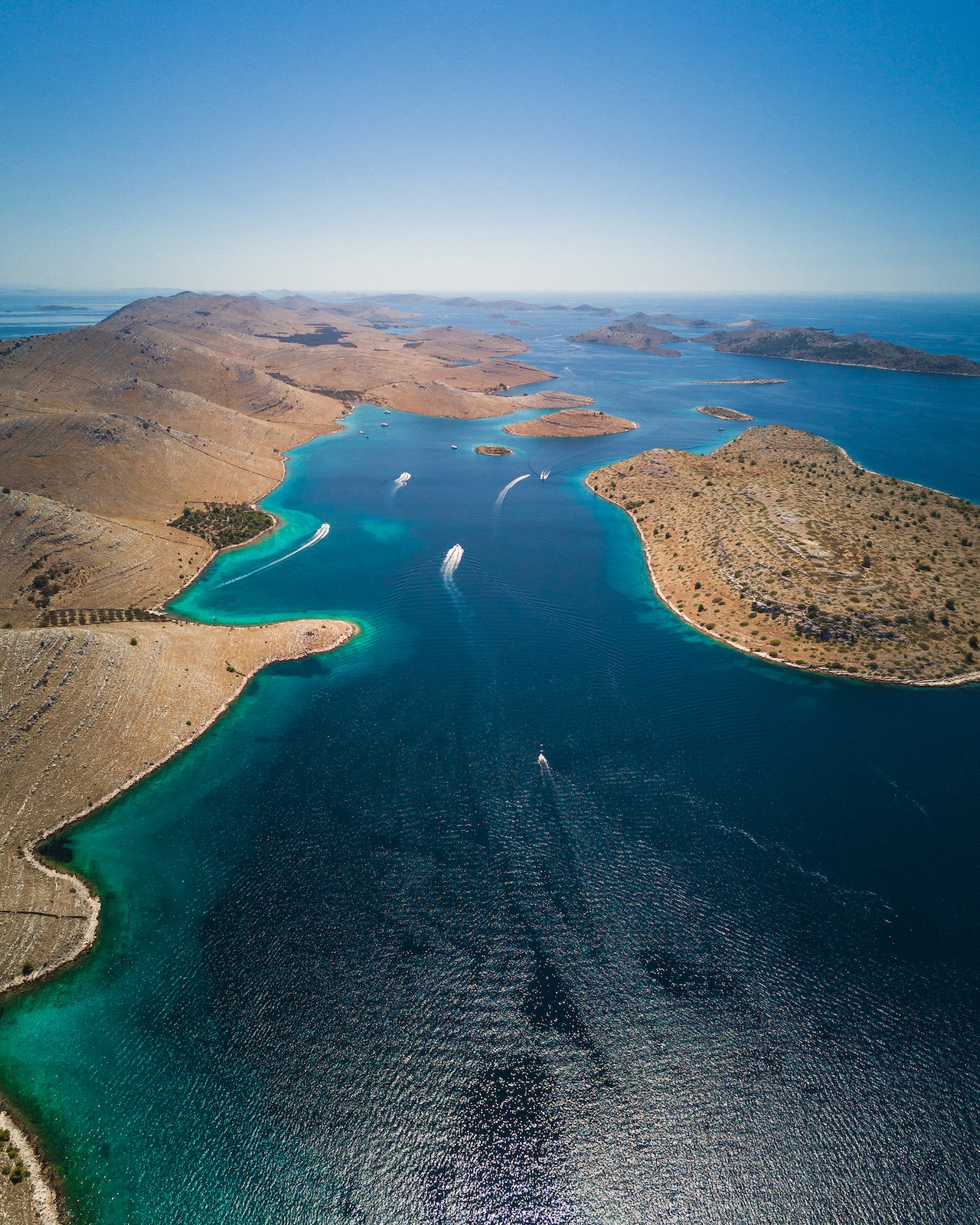
Kornati National Park
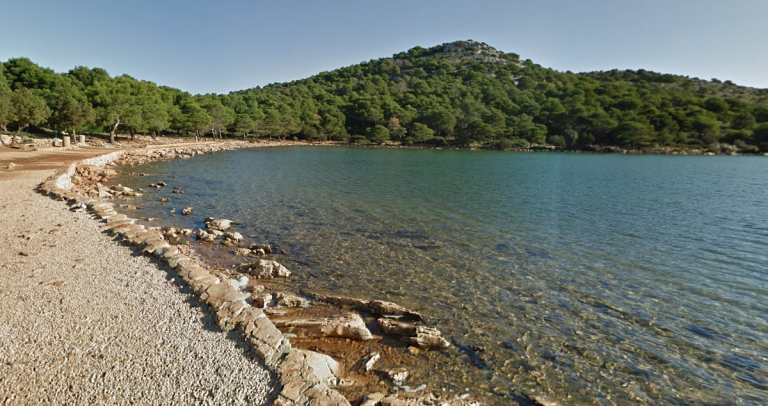
The Kornati archipelago is an isolated island group located in the central part of the Croatian part of the Adriatic Sea. The Kornati archipelago covers an area of about 320 square kilometers and includes about 150 islands, islets and rocks. Most of the Kornati island group was declared a national park in 1980. Geographically, Kornati can be divided into two main groups, Upper Kornati, which is closer to the mainland, and Lower Kornati, which mostly faces the open sea in the southwest.
Kornati National Park occupies an area of 218 square kilometers and includes a total of 89 islands, islets and rocks. Today, 620 land owners are registered in Kornati National Park, of which only 24 have registered residence inside the Park. The main economic activity in the entire area is traditional olive growing and extensive sheep breeding. The islands occupy less than a quarter of the total area of the park (a little less than 50 km2), which means that the sea surface dominates the park. If the island of Kornat, the largest island in the archipelago (32.5 km2), is excluded, the average area of an individual island within the Park would be less than 0.2 km2. The highest point is Metlin peak on the island of Kornat (237 m), and the deepest point in the sea surrounding the islands is near the islet of Purar (125 m).
The karst phenomenon, as one of the most valuable natural features of the Croatian landscape in general, characterizes this area as well. In the carbonate rocks of Kornati (shallow-sea limestone and dolomite from the Cretaceous period), which were exposed to atmospheric factors and intense karst processes, with shorter or longer interruptions, there are almost all karst formations characteristic of other parts of Croatian karst (caves, pits, cracks, sinkholes and others).
One of the most famous phenomena of the Kornati National Park are the crowns, popularly known as crowns or rocks, i.e. steep cliffs located on the southwestern island edge of both parks. It is a tectonic fault plane that was created as a result of the movement of the African tectonic plate towards the north and its subduction under the Eurasian plate. In some places, these crowns or cliffs descend vertically to a depth greater than 90 m below sea level. The highest crown within the Kornati National Park is 82 m high. Kornati is characterized by a relatively poor terrestrial flora (number of species and specimens), which is undoubtedly a consequence of the presence and actions of man. The only species of animal that lives in Kornati National Park is the white marten. Birds are numerous and 79 species have been recorded so far.
There is no ferry between Kornati and the mainland. A visit to the park is paid per boat, and for organized excursions, the ticket is included in the price of the excursion. If we visit the park with our own or a rented boat, then tickets can be bought at a tourist agency outside the park or from park rangers who issue tickets on the spot. Although Kornati is uninhabited, there are several dozen houses that can be rented, and several restaurants are open in the summer. Here a person can have a very active vacation in the form of hiking, diving or swimming. Boaters can take shelter in numerous sheltered bays, but the main marina is on the island of Piškera with 120 berths. The average monthly temperature for January is 7.3 °C, for July 23.9 °C, while the average sea temperature is 14 to 15 °C in winter and around 23 °C in summer.
The Kornati National Park is an idyllic haven for those who want to escape the crowds on the mainland. Remote, undeveloped and stunningly beautiful, the archipelago abounds in lush forests, desert plains and jagged karst limestone rocks. Here we can find a surprisingly diverse ecosystem and one of the richest marine life in the region.
Planning the trip from Biograd
Choose the entrance, route and transport before departure. Check travel time, weather, opening hours, ticket conditions and current park notices on the official website. For boat excursions, compare the route, included services and weather policy.
Practical advice
Bring drinking water, sun protection and footwear suited to the terrain. Mountain parks require proper hiking equipment; island and coastal parks require extra protection from sun and wind. Follow marked routes and park instructions.
Official information
np-kornati.hr · Phone: +385 22 435 740